

As the nation largely abandons mask mandates, physical distancing, and other covid-19 prevention strategies, elected officials and health departments alike are now championing antiviral pills. But the federal government isn鈥檛 saying how many people have received these potentially lifesaving drugs or whether they鈥檙e being distributed equitably.
Pfizer鈥檚 Paxlovid pill, along with Merck鈥檚 molnupiravir, are aimed at preventing vulnerable patients with mild or moderate covid from becoming sicker or dying. More than 300 Americans still every day.
National supply counts, which the Biden administration has shared sporadically, aren鈥檛 the only data local health officials need to ensure their residents can access the treatments. Recent federal changes designed to let large pharmacy chains like CVS and Walgreens efficiently manage their supplies have had an unintended consequence: Now many public health workers are unable to see how many doses have been shipped to their communities or used. And they can鈥檛 tell whether the most vulnerable residents are filling prescriptions as often as their wealthier neighbors.
KHN has repeatedly asked Health and Human Services officials to share more detailed covid therapeutic data and to explain how it calculates utilization rates, but they have not shared even the total number of people who have gotten Paxlovid.
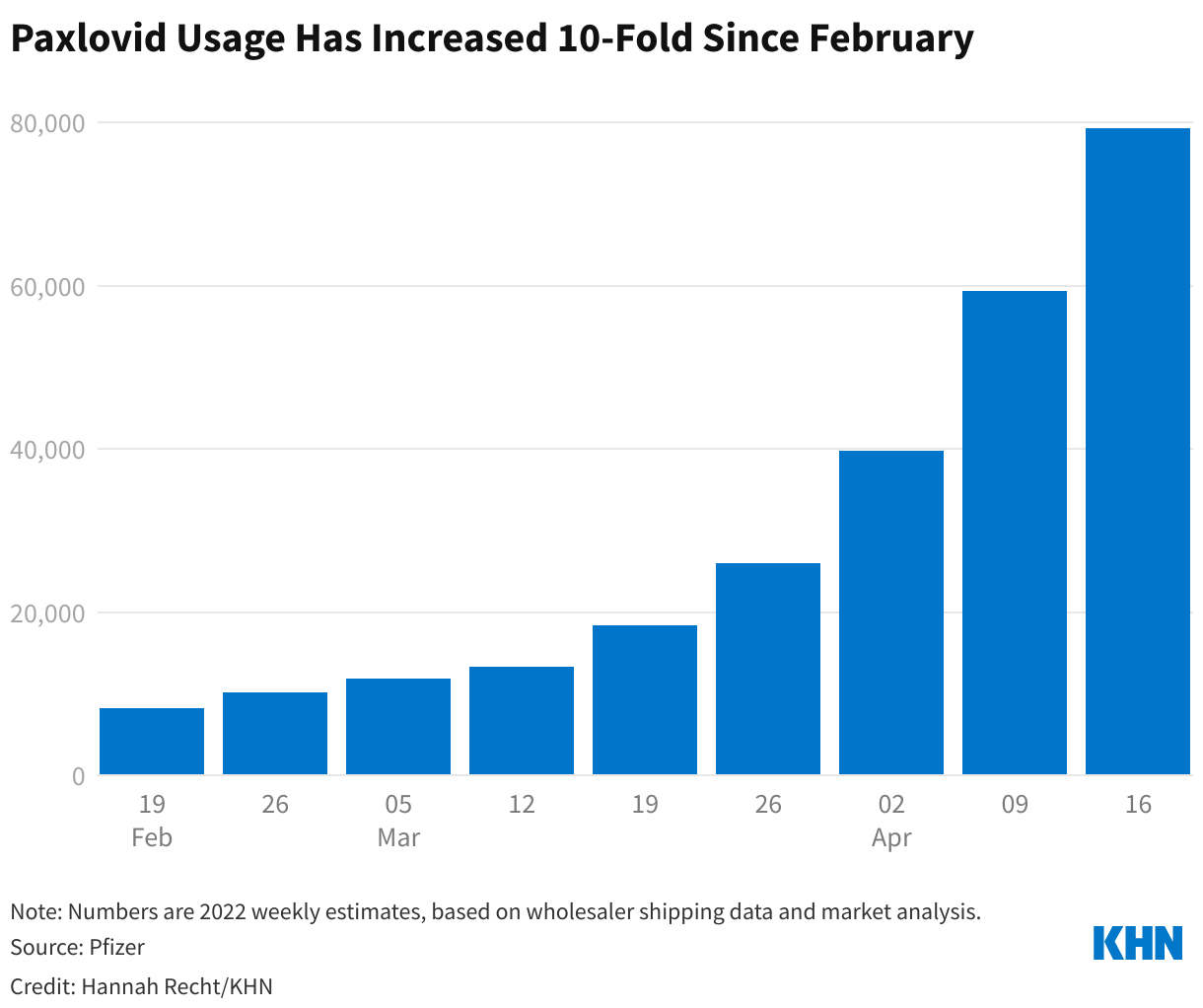
So far, the most detailed accounting has come from the drugmakers themselves. Pfizer CEO Albert Bourla reported on a that an estimated 79,000 people received Paxlovid during the week that ended April 22, up from 8,000 a week two months earlier.

Unlike covid , HHS doesn鈥檛 track the race, ethnicity, age, or neighborhood of people getting treatments. Vaccination numbers, initially published by a handful of states, allowed KHN to reveal stark racial disparities just weeks into the rollout. Federal data showed that Black, Native, and Hispanic Americans have died at higher rates than non-Hispanic white Americans.
Los Angeles County鈥檚 Department of Public Health has worked to ensure its 10 million residents, especially the most vulnerable, have access to treatment. When Paxlovid supply was limited in the winter, officials there made sure that pharmacies in hard-hit communities were well stocked, according to Dr. Seira Kurian, a regional health officer in the department. In April, the county launched its own to assess residents for treatment free of charge, a model that avoids many of the hurdles that make treatment at for-profit pharmacy-based clinics difficult for uninsured, rural, or disabled patients to use.
But without federal data, they don鈥檛 know how many county residents have gotten the pills.
Real-time data would show whether a neighborhood is filling prescriptions as expected during a surge, or which communities public health workers should target for educational campaigns. Without access to the federal systems, Los Angeles County, which serves more residents than the health departments of 40 entire states, has to use the that HHS publishes.
That dataset contains only a slice of information and in some cases shows months-old information. And because the data excludes certain types of providers, such as nursing homes and Veterans Health Administration facilities, county officials can鈥檛 tell if patients there have taken the pills.
Because so little data is available, Kurian鈥檚 team created its own survey, asking providers to report the ZIP codes of patients who have received the covid therapies. With the survey, it鈥檚 now easier to figure out which pharmacies and clinics need more supplies.
But not everyone completes it, she said: 鈥淥ftentimes, we have to still do some guesstimating.鈥�
In Atlanta, staff at Good Samaritan Health Center would use detailed information to direct low-income patients to pharmacies with Paxlovid. Though the drug wasn鈥檛 readily available during the first omicron surge, the next one will be 鈥渁 new frontier,鈥� said Breanna Lathrop, the center鈥檚 chief operating officer.
Ideally, she said, her staff would be able to see 鈥渆verything you need to know in one spot鈥� 鈥� including which pharmacies have the pills in stock, when they鈥檙e open, and whether they offer home delivery. Student volunteers built the center a similar database for covid testing earlier in the pandemic.
Paxlovid and molnupiravir became available in the U.S. in late December. They have quickly become the go-to treatments for non-hospitalized patients, replacing nearly all the monoclonal antibody infusions, which are against current covid strains.
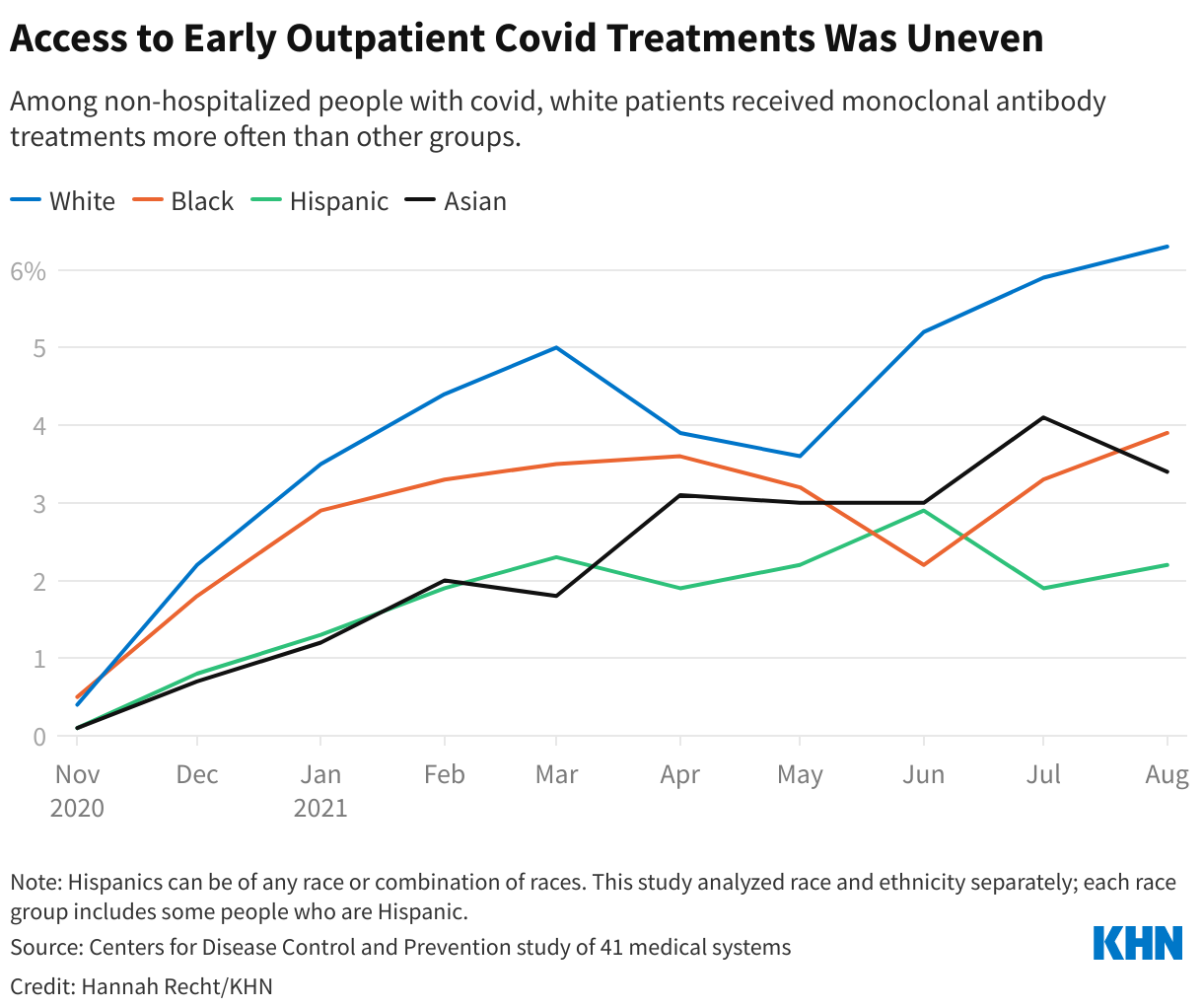
Though the government doesn鈥檛 record Paxlovid use by race and ethnicity, researchers for the first-generation infusions.
Amy Feehan, co-author of a and a clinical research scientist at Ochsner Health in Louisiana, found that Black and Hispanic patients with covid were significantly less likely than white and non-Hispanic patients to receive those initial outpatient treatments. Other researchers found that , lack of transportation, and not knowing the all contributed to the disparities. Feehan鈥檚 study, using data from 41 medical systems, found no large discrepancies for hospitalized patients, who didn鈥檛 have to seek out the drugs themselves.
Patients at Atlanta鈥檚 Good Samaritan Health Center often don鈥檛 know that if they get tested quickly they can receive treatment, Lathrop said. Some assume they don鈥檛 qualify or can鈥檛 afford it. Others wonder if the pills work or are safe. There are 鈥渏ust a lot of questions in people鈥檚 minds,鈥� Lathrop said, about whether 鈥渋t benefits them.鈥�
When Dr. Jeffrey Klausner was a deputy officer at the San Francisco Department of Public Health, 鈥渙ur first priority was transparency and data sharing,鈥� he said. 鈥淚t鈥檚 important to build trust, and to engage with the community.鈥� Now a professor at the University of Southern California, he said federal and state officials should share the data they have and also collect detailed information about patients receiving treatment 鈥� race, ethnicity, age, illness severity 鈥� so that they can correct for any inequities.
Public health officials and researchers who spoke with KHN said that HHS officials may not think the data is accurate or have adequate staff to analyze it. The head of HHS鈥� therapeutics distribution effort, Dr. Derek Eisnor, suggested as much during an April 27 meeting with state and local health officials. One local official asked the federal agency to share local numbers so they could increase outreach in communities with low usage. Eisnor responded that because HHS doesn鈥檛 require providers to say how much they use, the reporting 鈥渋s kind of mediocre at best,鈥� adding that he didn鈥檛 think it was his agency鈥檚 role to share that information.
Eisnor also said that state health departments should now be able to see local orders and usage from pharmacy chains like CVS, and that the agency hopes to soon release weekly national data online. But counties like Los Angeles 鈥� which has requested access to the federal systems with no success 鈥� still don鈥檛 have access to the data they need to focus outreach efforts or spot emerging disparities.
Spokesperson Tim Granholm said that HHS is looking into ways to share additional data with the public.
Recordings of the weekly meetings, in which HHS officials share updates about distribution plans and answer questions from public health workers, pharmacists, and clinicians, were until March. HHS鈥� media office has since repeatedly declined to grant KHN access, saying 鈥渢he recordings are not open to press.鈥� That鈥檚 because HHS wants to encourage open conversation during the meetings, according to Granholm. He did not say what legal authority allows the department to bar media from the public meetings. KHN obtained the public records through Freedom of Information Act requests.
A senior White House official said that the Biden administration is attempting to collect accurate data on how many people receive Paxlovid and other treatments but said it doesn鈥檛 define success by how many people do so. Its focus, the official said, is on making sure the public knows treatments are available and that doctors and other providers understand which patients are eligible for them.
We still need to know where the pills are going, Feehan said. 鈥淲e need that data as soon as humanly possible.鈥�
Until then, Los Angeles County鈥檚 Kurian and her peers will keep 鈥済uesstimating鈥� where residents need more help. 鈥淚f someone can just give us a report that has that information,鈥� she said, 鈥渙f course, that makes it easier.鈥�