Miranda Dale had her first breakdown during her freshman year at the University of Virginia in Charlottesville. It was 2 a.m. on a Saturday, and she hadn鈥檛 left her dorm room in days.
鈥淚 honestly didn鈥檛 know what to do,鈥� says Dale. 鈥淚 heard rumors that at a big university you鈥檙e just a number and you鈥檙e not going to get through to anyone鈥� at the university counseling center.
But when she called the school鈥檚 counseling line, someone answered right away. Dale got help getting a prescription for medication, and she was booked for an appointment that Monday. She was eventually diagnosed with , a mood disorder that usually requires medication.

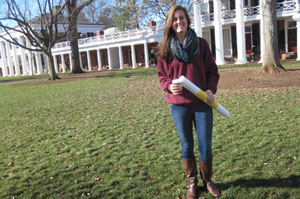
Meredith Was, co-president of the University of Virginia chapter of Active Minds, began seeing a counselor on campus at the beginning of her senior year to help her deal with the uncertainty of graduation and a bad breakup (Photo by Jenny Gold/KHN).
Over the past decade, colleges and universities across the country have of students like Dale with mental health needs. The stigma of mental illness has started to dissipate, and more students are comfortable seeking help. In addition, teenagers with serious conditions are getting treatment earlier, and so a population of students that previously didn鈥檛 make it to college now arrives on campus each fall.
The average college counseling center of the student body each year.
Some campuses are exploring new systems to help meet the growing demand. At UVA, for example, the counseling center uses a triage system to make sure it is able to see as many students as possible.
When students first call the counseling line, they are given a 20-minute phone consultation with a therapist on their sleeping and eating habits, attendance, substance use, and whether they鈥檙e having thoughts of self-harm. That鈥檚 according to psychologist Russ Federman, former director of the UVA counseling center.
Students in crisis are seen immediately. Another quarter of callers are referred to off-campus therapists right away. Dale was seen only once at the counseling center. After her initial appointment, she was referred to a private therapist off-campus instead.
With the help of the triage system, the UVA counseling center was able to accommodate 9,000 visits last year with only 12 full-time therapists.
Overall, schools are getting better at meeting the mental health needs of their students, says Alison Malmon, president and founder of , a mental health advocacy group with chapters on campuses across the country.
鈥淣ot everything is great; we would love all students to be able to get all of the unlimited visits they could get on campus,鈥� Malmon says.
Recently, as the No. 1 student complaint on college campuses, according to a survey of college counseling centers. Malmon says that has a lot to do with the current economy.
Meredith Was, who heads up the Active Minds chapter at UVA, says she started to feel the stress of getting a job after graduation during the first semester of her senior year.
Was saw a counselor for just seven sessions, enough to help her deal with the uncertainty of graduation, along with a painful breakup.
Between suicide prevention outreach, free counseling sessions and the triage system, UVA manages to mostly stay ahead of the demand for services.
鈥淲e really want students to know it鈥檚 OK to reach out for help, and there鈥檚 no shame in having anxiety or depression or anything,鈥� says Federman. 鈥淚t鈥檚 just part of the human condition.鈥�
Especially, he adds, during the college years.