
For Patients, What A Difference A Note Makes
Doctors are to provide patients with a copy of their medical notes upon request, but few patients ask and doctors generally don’t make the process easy.
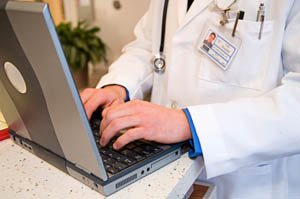
When patients were offered online access, however, 90 percent read their doctors鈥� notes with some impressive results.
A of the Annals of Internal Medicine found that 60 to 78 percent of patients who read their visit notes reported that they were more likely to take their medications as prescribed. 聽And their doctors reported that sharing their notes actually strengthened relationships with patients.
The study included 105 primary care physicians and 13,564 of their patients at Beth Israel Deaconess Medical Center in Massachusetts, Geisinger Health System in Pennsylvania and Harborview Medical Center in Washington, who participated聽 in a project called OpenNotes, in which patients were given electronic access to their files.
Study authors Tom Delbanco and Jan Walker of Beth Israel said they were surprised and delighted to find that patients who viewed their medical notes were more likely to take their medicines correctly. 鈥淢edication adherence is one of the greatest problems in health care,鈥� said Delbanco, 鈥測et flipping this switch seems to activate patients.鈥�
As one patient explained, 鈥渉aving it written down, it鈥檚 almost like there鈥檚 another person telling you to take your meds.鈥�
Patients also reported 鈥渁n increased sense of control, greater understanding of their medical issues, improved recall of their plans for care, and better preparation for future visits,鈥� the study authors write.
Despite that sharing their notes would increase their workload, few of them reported longer visits or spent more time answering patients鈥� questions outside of visits.
One concern is that doctors may change the way they write their notes if their patients can read them. Since the same notes are shared with other doctors, this could have a clinical impact. As an example of a minor change, some doctors reported using 鈥渂ody mass index鈥� in place of 鈥渙besity鈥� to avoid offending their patients.
Blunt language, however, seems to have motivated some patients. 鈥淚n his notes, the doctor called me 鈥榤ildly obese,鈥� one patient commented. 鈥淭his prompted my immediate enrollment in Weight Watchers and daily exercise. I didn鈥檛 think I had gained that much weight. I鈥檓 determined to reverse that comment by my next check-up.鈥�
At the end of the experiment, nearly 99 percent of the participating patients wanted continued access to their visit notes. And all three participating hospital sites have decided to broaden patient access to their doctors鈥� notes.
鈥淥ur greatest hope is that this will become a standard of care,鈥� said Walker. 鈥淲e鈥檙e at a good time in history because more and more doctors and hospitals are getting electronic health records and putting up secure patient portals,鈥� allowing many patients easy access to their records.
They add, however, that privacy implications could be enormous: 20 to 45 percent of patients reported that they shared their notes with others, including family and friends. A patient could also choose to post their notes on Facebook or Twitter. 鈥淭he patient-doctor relationship is confidential,鈥� explained Delbanco, 鈥渂ut whether it鈥檚 private is now up to the patient.鈥�


