Even as Massachusetts celebrates a dip in the growth rate of health care costs, state lawmakers聽are still working feverishly on cost-control bills.
The critical question: How much health care spending should the state aim to cut?聽Two unlikely bedfellows, the state鈥檚 largest employer group and a coalition of congregations, are putting the pressure on legislators to go deep.聽 聽
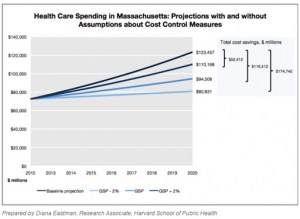
In separate actions Tuesday night, The and the state鈥檚 largest employer group, posted the same goal.聽 Health care spending has been growing at least twice as fast as the rest of the state鈥檚 economy. But these groups say the state must hold all health care spending 鈥� including both government spending and private spending 鈥� to a rate of two percentage points below the state鈥檚 gross state product, or GSP.
GSP -2 would be a dramatic change 鈥� that鈥檚 like your boss putting a pay freeze on top of two salary cuts.聽For almost two decades, health care costs in Massachusetts have outpaced the commonwealth鈥檚 gross state product.
鈥淥ur state must take strong action to reverse the trend of the growth of health care costs and provide incentives to create a health care system that rewards quality not quantity; health care not sick care,鈥� GBIO president, Rev. Burns Stanfield, said at a church rally of 325 members.聽
The same evening, in a blog AIM president Rick Lord聽said, 鈥淭he math is pretty simple.鈥� If one third of all health care spending is waste, or care that doesn鈥檛 make people better, then 鈥渢he process of keeping health care cost growth below economic growth seems reasonable,鈥� Lord argued.
The Massachusetts Hospital Association says GSP -2 is 鈥渁 really bad idea鈥� that would force massive layoffs and the closure of some hospitals.聽 The association鈥檚 president and CEO, Lynn Nicholas, believes people have the wrong idea about how waste occurs in health care.
鈥淏usiness people think of waste as something like closing off parts of an assembly line,鈥� says Nicholas.聽 鈥淭he waste in health care is marbled in like fat in a steak and it has to be teased out very carefully so that you don鈥檛 destroy what鈥檚 left.鈥�
A coalition that includes at least two dozen hospitals, physician groups, health plans and employers has another idea: hold the costs to gross state product聽plus one.
Stuart Altman, who chairs the Eastern Massachusetts Healthcare Initiative, says just getting health care in line with the gross state product would be a major achievement.聽 Altman, a health care economist who advised Presidents Nixon, Clinton and Obama, said he is 鈥渃oncerned about both what it (GSP -2) would do to the delivery system, and to the quality of care, to patients, and what it would do to the economy of Massachusetts. It鈥檚 just too drastic a cut.鈥�
The difference between GSP+1 and GSP-2 is roughly $7 billion in 2015, when total health care spending in Massachusetts would hit roughly $89 billion. By 2020, the difference would grow to about $21 billion.
So how might the different spending goals affect patients?聽 It depends, of course, on whom you ask. Don Berwick, the former president and CEO at the Institute for Healthcare Improvement, says the state can cut costs while protecting patients.聽
鈥淚 do not believe that is it necessary or wise to reduce costs by hurting patients,鈥� continues Berwick. 鈥淭his is done simply by routing out waste in practice that pervades a lot of the American health care system.鈥�
It鈥檚 the prospect of job losses and patients rebelling against changes in their care that is scaring some state legislators.聽 House Speaker Robert DeLeo said last week that he would propose health care spending 鈥渕ore in line with state economic growth鈥� which is currently 3.7 percent.聽聽 Legislation from the Massachusetts House and Senate expected out next month or in May.
Paul Ginsburg, of the Center for Studying Health System Change, says the goal Massachusetts sets for controlling health care costs will get a lot of national attention.聽 But he says the target is not as important as 鈥渨hat they (regulators) do if the goal isn鈥檛 met. That will be the most instructive thing鈥� for the country.聽
Governor Deval Patrick has suggested that state regulators review and reject contracts between insurers and providers that exceed whatever target the state sets.聽 There鈥檚 no word yet from the House and Senate on proposed consequences.