
Teaching Doctors About The Cost Of Care
All聽new doctors take the , promising to care for their patients to the best of their abilities.
But what does that mean in terms of the cost of that care, when medical debt accounts for of personal bankruptcies in the United States?
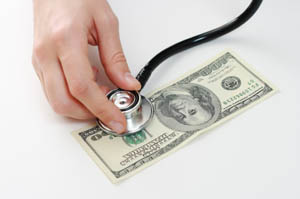
The fee-for-service payment system has long rewarded doctors financially for running more tests and doing more procedures, even though that can drive up costs for patients.
But as the country grapples with mounting health care costs and dwindling resources, physician organizations have started to look at how the everyday decisions made by doctors drive up the cost of care for patients. have even come up with lists of expensive tests and treatments that are commonly prescribed but are often not necessary.
Still,聽鈥渢he conversation has yet to change the way we鈥檙e trained to practice care,鈥� write Drs. Lisa Rosenbaum and Daniela Lamas in a perspective piece published this week in that looks at how medical schools are teaching (or choosing not to teach) the next generation of doctors about fiscally-responsible medicine.
鈥淚s there a place for principles of cost-effectiveness in medical education? Or does introducing cost into our discussions threaten to destroy what remains of the patient-physician relationship?鈥� the authors ask.
Medical schools, Rosenbaum and Lamas explain, traditionally train students by presenting them with a sick patient, and asking them how to proceed. A cough and fever, for example, could be a sign of pneumonia, but it could also mean pulmonary embolism, heart failure, or scores of different rare diseases. Inevitably, this leads to students recommending a battery of tests (and a mounting bill for their hypothetical patient), and leaves them with the lesson that resources are essentially unlimited.
A few medical schools, however, have started to impart a more nuanced perspective that 鈥渢hinking about cost can actually ,鈥� a message that may serve new doctors well in the changing world of accountable care organizations, pay-for-performance and value-based purchasing.
The University of California, San Francisco, for example, is using a curriculum for internal medicine residents that brings cost into the equation.
In one lesson, the young doctors evaluate the treatment given to a patient with a pulmonary embolism, focusing on the benefits and costs of each test and procedure. When the students finished making their recommendations, Rosenbaum and Lamas write, the hospital bill comes to $155,698, some of which would likely be shouldered by the patient, even if that patient is insured. The idea is not to skimp on necessary care, but rather to determine whether some of that spending was wasteful.
鈥淭he focus is not on limiting expensive care, but rather on the principles of evidence-based medicine,鈥� they write. Efforts to teach about cost are spreading, and the American College of Physicians has been working to create a curriculum for medical schools. Residency programs are to teach doctors to 鈥渋ncorporate considerations of cost awareness and risk-benefit analysis” in caring for patients, according to the , though not all programs comply.
And not everyone approves of training doctors to consider costs. Rosenbaum and Lamas cite Dr. Martin Samuels of Boston鈥檚 Brigham and Women鈥檚 Hospital, who 鈥渃autions that when physicians start weighing society鈥檚 needs as well as those of individual patients, they begin to lose the essence of what it means to be a doctor.鈥� Some even question whether considering the costs to society instead of focusing on what鈥檚 best for the patient could potentially force doctors to violate their Hippocratic Oath.
But taking costs into account isn鈥檛 just about bending the cost curve for the country. It鈥檚 also about the that medical debt can have on the lives of the who are struggling to pay their health care bills.
鈥淧ut simply, helping a patient become well enough to climb the stairs to his apartment is meaningless if our care leaves him unable to afford that apartment,鈥� the authors write.


