
Treating A Scorpion Sting: $ 100 In Mexico Or $ 12,000 In U.S.
Say you鈥檙e trekking through the desert in Mexico, minding your own business, when all of a sudden a scorpion scrambles up your boot and stings your leg. You hobble over to a nearby clinic, where you鈥檙e given a dose of anti-venom that brings you fast relief. The charge for the serum is about $100.
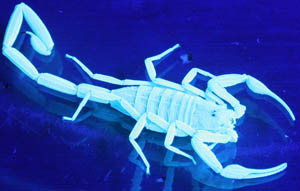
Now imagine instead that you happen to be hiking in Arizona, and the same type of scorpion stings you. You make it to the emergency room, where the charge for a dose of the same anti-venom costs can cost as much as $12,000, according to a survey by .聽聽Since patients need three to five doses, the cost can reach about $50,000.
The vast difference in cost is causing some consternation among doctors and hospitals in Arizona, where about 11,000 people are stung by scorpions each year. But the large markup is common for drugs that are used for rare conditions, also called 鈥渙rphan drugs.鈥�
The drug, called , has been available for years in Mexico, but was just given in August聽 for the U.S. market. Anascorp is designed to treat the sting of the Bark Scorpion, a particularly poisonous species.聽 The sting is rarely fatal but often extremely painful. Some victims may just require ice packs, but the sting can also cause loss of muscle control and difficulty breathing, particularly for infants and young children. Some patients may require heavy sedation and several days in the intensive care unit; in these severe cases, the anti-venom can offer relief quickly.
鈥淭his drug ranks up there in the most satisfying to give,鈥� says Dr. Dan Quan, an emergency physician at Maricopa Medical Center in Phoenix, Ariz., who often sees two stings a day during scorpion season. 鈥淚n an hour and a half, you can send a patient home that couldn鈥檛 breathe, swallow or talk.鈥�
Dr. Quan tries not to think about costs when determining whether a patient requires the anti-venom, but he says that the 鈥渃ost has really clouded everyone鈥檚 use鈥� of the drug. 鈥淵ou don鈥檛 want to break the back of a patient that doesn鈥檛 make a whole lot of money. It could be an entire year鈥檚 salary.鈥�
Milton Ellis, president of Rare Disease Therapeutics, a Tennessee-based company that has the rights to Anascorp in the U.S., told The Arizona Republic that the cost of the drug is based on a number of factors, including the expensive clinical trial the company sponsored to get FDA approval and the expected demand for the serum. The company sells the drug for $3,500 to another firm that provides it to Arizona hospitals for about $3,780, The Republic found.
Hospitals mark up the drug to cover other costs, including the expenses of patients who are uninsured and the heavy discounts it gives to insurers. Rodney Phillips, a health care consultant for hospitals, says the hospital markup for Anascorp is not unusual and each hospital sets its own markup based on its finances.
Dr. Leslie Boyer, director of the Venom Immunochemistry, Pharmacology and Emergency Response (VIPER) Institute and the principal investigator of the Anascorp study published in the ,聽 says she was surprised and 鈥渁 little saddened鈥� by the high cost of the drug. 鈥淚t鈥檚 priced at a level where we can only use it for the very sickest patients, when I know that people with more moderate symptom would also benefit but might not be able to afford it,鈥� she explains.
If the drug were 鈥減riced for the walking miserable,鈥� instead of only those patients with the most severe symptoms, more of the drug would be sold and the price could be lower, she explains. As it is, she worries that rural Arizona hospitals, which tend to be the least wealthy, will not be able to stock the anti-venom and will still have to send critically-ill patients on a long helicopter or ambulance ride instead.
The high prices, she says, are 鈥渁 public health problem.鈥�


