


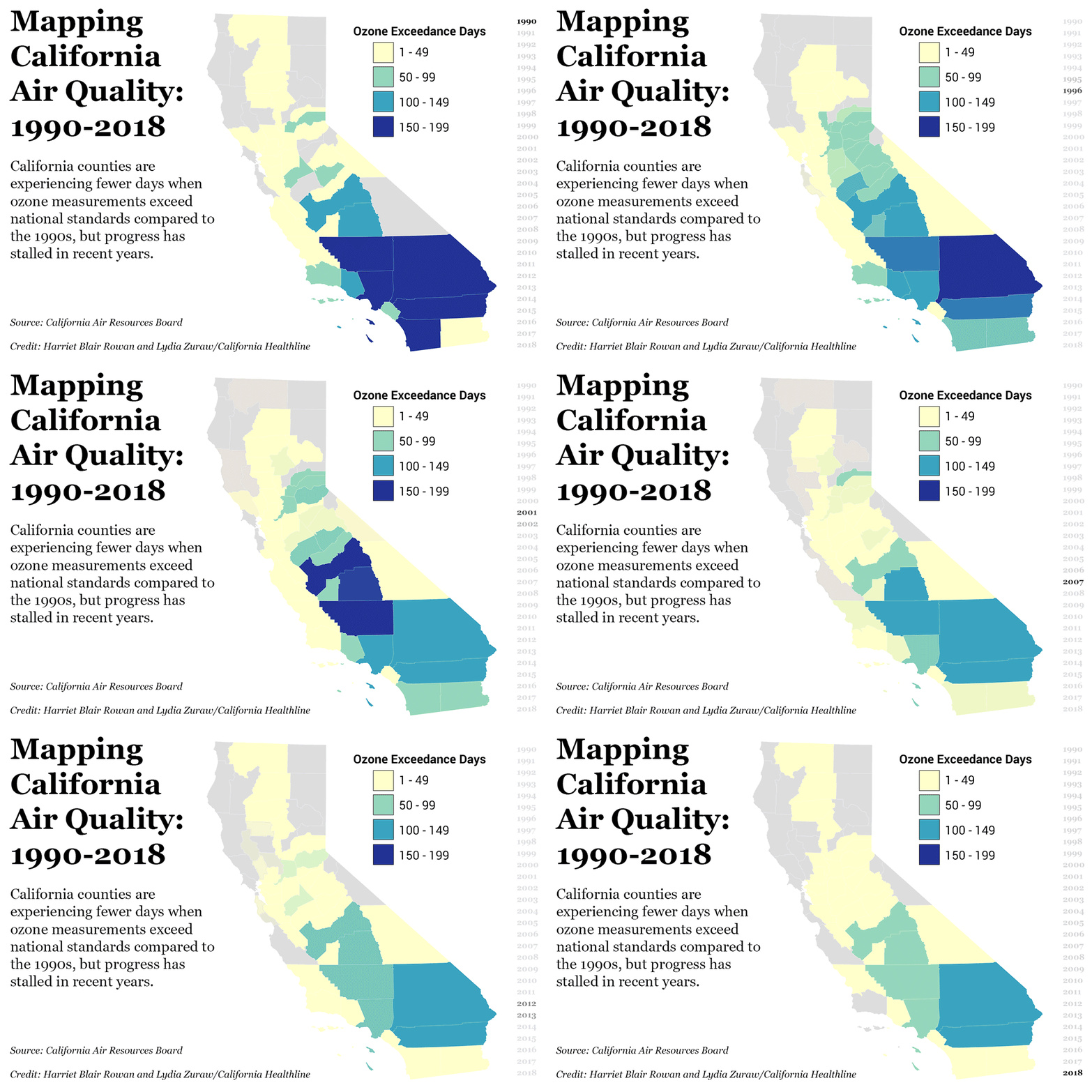
Ed Avol grew up in Los Angeles in the 1960s, but he rarely caught a glimpse of the rolling green contours and snowy peaks of the San Gabriel Mountains just east of the city. More often than not, they were obscured by the low-hanging gauze of smog that cloaked the L.A. basin in a dreary gray much of the year.
鈥淢ost days you could not see the mountains鈥� said Avol, now a professor of clinical preventive medicine at the University of Southern California鈥檚 Keck School of Medicine and chief of its environmental health division. 鈥淚 was amazed that there were even mountains there.鈥�
The effects of the smog weren鈥檛 just visual; they were felt by residents living in that polluted air. Persistent headaches. Watering eyes. Labored breath. Avol recalls how he and other members of his high school cross-country team sometimes coughed for days after competing in the smoggy air.
Over the decades, Avol has continued to make his home in Los Angeles, and has had a front-row seat to dramatic improvements in air quality. Much of that improvement stems from the ever-tightening standards California has enacted for auto and truck tailpipe emissions, starting in the 1960s. Avol is among the environmental researchers whose work has helped propel that steady progress.
鈥淭here鈥檚 a significant air pollution problem in California,鈥� Avol said. 鈥淭here鈥檚 also a success story to tell for pollution mitigation and reduction in California.鈥�
California is now engaged in a high-stakes legal battle with President Donald Trump and his administration over the state鈥檚 longstanding authority to set its own emissions standards for cars and trucks sold in California. The administration has moved to revoke a waiver, in place since the federal Clean Air Act of 1970, that enables the state to set stricter emissions standards than the federal government because its pollution problems are so unique and severe.
In its initial efforts, California鈥檚 stricter standards targeted the emissions that fed the cloak of smog Avol knew growing up, including ozone and carbon monoxide. More recently, the state has expanded its target to include greenhouse gas emissions that contribute to climate change and global warming.
When it comes to smog, the standards have made a difference. Over the past three decades, counties across the state have made steady progress in reducing days that registered hazardous levels of ozone and particulate matter.

The improved air quality led to improved health indicators. For example, that tracked Southern California children over 20 years found that the reduction in smog translated to roughly 20% fewer new asthma cases in children.
Even with progress, the state鈥檚 pollution problems are far from solved. California鈥檚 large population combined with its fanatic car culture, warm climate, wind patterns and towering mountain-to-deep-valley geology have made continued improvement challenging. The state also bears a disproportionate burden of the country鈥檚 economic trade via high-emission trains, planes and ships.
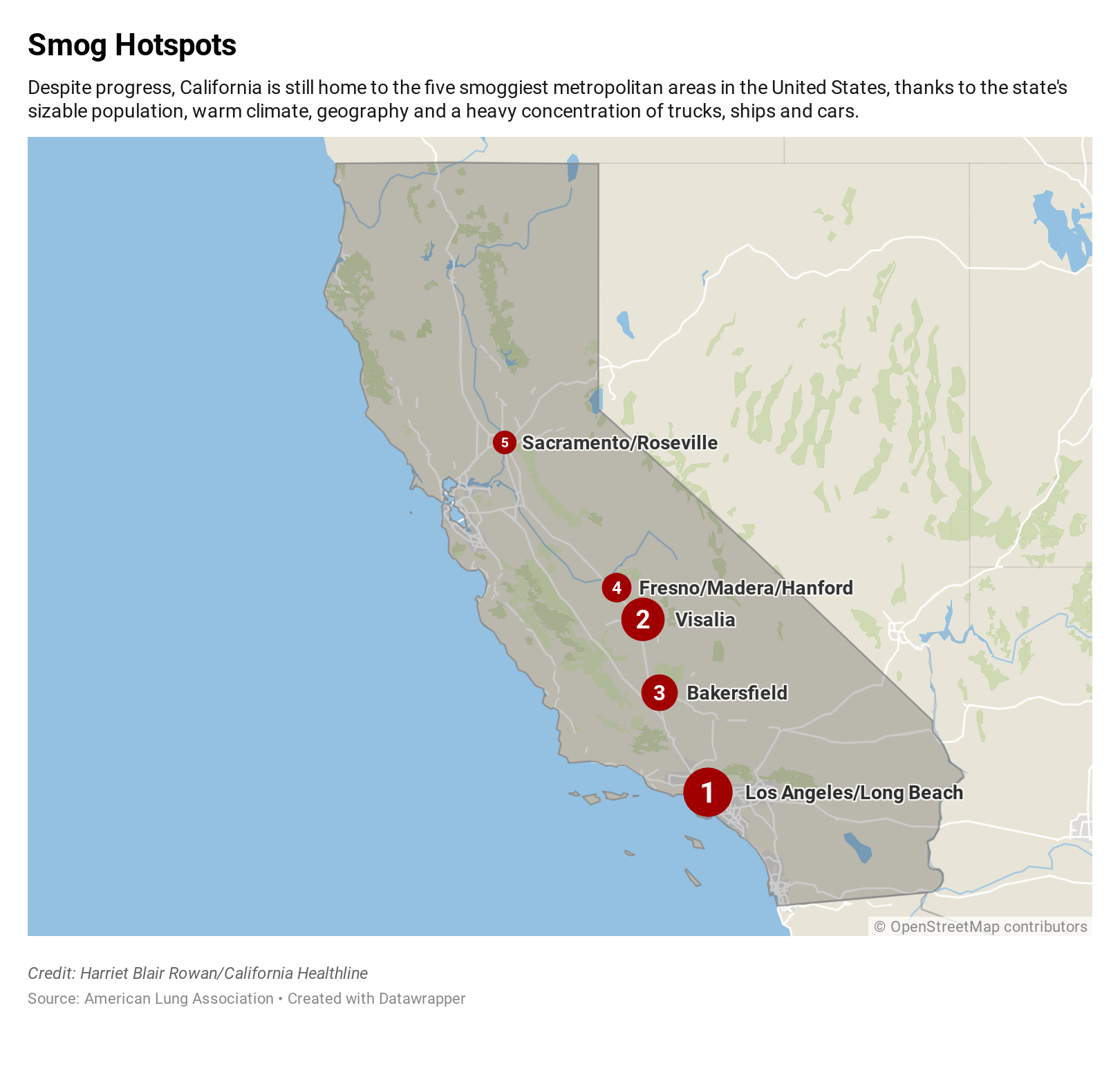
California still has the five metropolitan areas that routinely register in the nation: Los Angeles, Visalia, Bakersfield, Fresno and Sacramento.
Avol is among those who say the Trump administration鈥檚 efforts to roll back emissions standards are likely to impede further progress. Still, he finds a silver lining. The standoff has focused a spotlight on how far California has come because it implemented strict standards and the difference that has made for the people who live here.
鈥淚n terms of protecting public health,鈥� Avol said, 鈥渋mproving air quality is a big deal.鈥�
This story was produced by聽, which publishes聽, an editorially independent service of the聽.


