


Among the many questions brought up by the horrifying killings in Isla Vista, Calif., last month were what could have parents have done to prevent the tragedy, if anything? And what did they actually know about their son鈥檚 mental illness? 聽
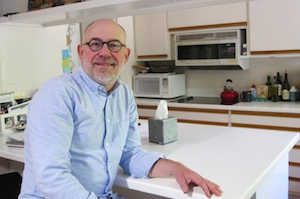
Mark, a minister who lives in Northern California, has not been able to communicate with doctors for his son, Scott, since Scott became an adult (Photo by Jenny Gold/ KHN).
Some parents of adult children with mental illnesses . And often, as the people who care the most about them, many parents want the doctors, social workers and other providers to share protected patient information.聽
The 1996 privacy law HIPAA (The Health Insurance Portability and Accountability Act) was created in part to protect patients鈥� information, but it also presents a dilemma for families of people with serious mental illnesses like schizophrenia. Family members wonder how they can protect their loved one if they won鈥檛 share treatment details.
Mark, an ordained minister in Moraga, California, struggles with that question almost every day.聽 His son Scott, 24, has and has been hospitalized a dozen times for the hallucinations, mania and depression that it brings. (Kaiser Health News and NPR are not publishing the family鈥檚 last name to protect Scott鈥檚 identity.)
Mark first noticed a change in his son just before his high school graduation. 鈥淭here was a deep aggressiveness that started to emerge. We just thought well it was frustration with life or circumstances, things weren鈥檛 going well in school,鈥� he recalls.
And it got worse. In the middle of an argument one day, Scott threw a small table at his mother. The police were called, and Scott was taken to a psychiatric hospital. Still in school, he was treated as a minor by the hospital. Mark and his wife were invited to meet with Scott鈥檚 doctors and set up a treatment plan.
鈥淲e saw, ok this is kind of the way it works,鈥� says Mark adding: 鈥淭hat was pretty much the last time we had that opportunity鈥� to talk to any medical professionals about their son.
The next time Scott was hospitalized, he was treated as an adult and everything was different. The doctors told the family that because of HIPAA, they could not be part of the treatment conversation unless Scott granted permission, which he refused to do. All the family could do was fax a social worker at the hospital a case history they had written about their son and hope that someone would read it.
鈥淲e were shut out of the conversation,鈥� says Mark. 鈥淎nd I think that was the first time we really started feeling hopeless. As long as we could feel we were in a conversation with them, we had a sense of hope. All of a sudden there was a wall that went up and that was gone.鈥�
What little information Mark and his wife get about Scott鈥檚 treatment comes from their insurance company, since Scott is still on their plan. Mark still has scars on his head from a recent altercation with Scott.
Mark is a gentle and deliberate man with round glasses and a rosy complexion. His tidy suburban home is filled with photos of his children and piles of books about faith. But, he wonders, 鈥渨hy am I as the one who is a primary care giver, protector, provider, whatever– I鈥檝e watched this kid grow up, and yet I鈥檓 out of the circle? I can鈥檛 be there to be of help.鈥�
鈥淚 hear this all the time from families who are very frustrated,鈥� says Dr. E Fuller Torrey, a psychiatrist and founder of the , a nonprofit that works to tighten treatment laws for mental illness. He says the problem is that HIPAA wasn鈥檛 written with mental illness in mind.
鈥淲hen someone has cancer, you can make the assumption that their brain is working normally so that they can make an informed decision as to whether or not they want their loved ones to know exactly what the details of the cancer is,鈥� Torrey says. 鈥淵ou can鈥檛 make that assumption about people with schizophrenia or bipolar disorder.鈥�
Often, he says, sharing information with the family can be crucial to a patient鈥檚 care, helping to ensure that they stay with a treatment plan and prevent readmission to the hospital. This is particularly important for mothers and fathers, he continues, who 鈥渟till continue to provide the primary care for many, many of the people who are severely mentally ill.鈥� Torrey supports a , sponsored by Rep. Tim Murphy (R-Penn.), that would alter HIPAA to make it easier for families to access information for patients with severe illness.
But the provision within that Torrey supports is controversial within the mental health community. Opponents say that weakening privacy protections would make patients less willing to seek treatment.
鈥淚n order for people to feel like they can say important things to a mental health provider, they need to know that it鈥檚 going to be kept confidential,鈥� says Jennifer Mathis, director of programs at the , a nonprofit an organization devoted to protecting the civil rights of people with mental illness.
Mathis says the problem isn鈥檛 the actual law — there are already that allow providers to talk to family or caregivers when the patient is a danger to themselves or others. But those exceptions often are not used. Sometimes, Mathis says, providers may be 鈥渉iding behind HIPAA,鈥� so that they don鈥檛 have to deal with families or because they are afraid of being sued.
Another problem could be simple misunderstanding. 鈥淭here鈥檚 a tremendous amount of misinformation among the general public and the medical community about HIPAA,鈥� says Carolyn Wolf, who directs the mental health practice at Abrams Fensterman, a law firm in New York. Doctors often don鈥檛 understand that there are situations where they would be permitted reveal information.
But even for doctors who thoroughly understand HIPAA, the safety exemption can be too narrow. 鈥淭he vast majority of situations families find themselves in are not life and death,鈥� she says. And parents of people with severe mental illness often need to work in partnership with medical staff to manage the care of their children.
For Scott鈥檚 father Mark, the exemptions to the privacy law are little comfort.
鈥淚t has been a very arduous journey, and it continues,鈥� Mark says. 鈥淚t鈥檚 had its moments of extreme anguish, a lot of tears shed, a lot of prayers prayed, a lot of just absolute puzzlement at life itself.鈥�
For now, as a father and as a minister, he鈥檚 relying on faith.


