


LegislationĀ introduced in the California Senate last week would set the state on a path toward the possible creation of a single-payer health care system ā€• a proposal that has failed to gain traction here in the past.
The bill, which is a preliminary step, says that it is the ā€œintent of the Legislatureā€ to enact a law that would establish a comprehensive, single-payer health care program for the benefit of everyone in the state. The legislation, introduced by state Sen. Ricardo Lara (D-Bell Gardens), does not offer specifics of what the plan would look like, nor does it mention a timetable.
A single-payer system would replace private insurance with a government plan that pays for coverage for everyone. Proponents argue that single-payer systems make health care more affordable and efficient, but opponents say they raise taxpayer costs and give government too much power.
Medicare, the federally-funded health coverage for the elderly, is often held up as a model of what a single-payer system might look like.
Lara said in an interview late last week that the state needs to be prepared in case the Affordable Care Act is repealed, as President Donald Trump and Congressional Republicans have promised.
ā€œThe health of Californians is really at stake here and is at risk with what is being threatened in Congress,ā€ Lara said, as the debate continued in Washington about the future of President Barack Obamaā€™s signature health law. ā€œWe donā€™t have the luxury to wait and see what they are going to do and what the plan is,ā€
Lara noted that while the Affordable Care Act expanded health coverage for many Californians, it left others uninsured or underinsured. He said the single-payer bill builds upon his ā€œhealth for all kidsā€ legislation, which resulted in coverage beginning last May for 170,000 immigrant children here illegally.
ā€œIā€™ve met many children who have asked me point blank, ā€˜What about my mom? What about my dad?ā€™ā€ Lara said.
He recently to the federal government, based on a bill he had introduced, that would have allowed adult immigrants here illegally to purchase unsubsidized health plans through Covered California, the stateā€™s insurance exchange.
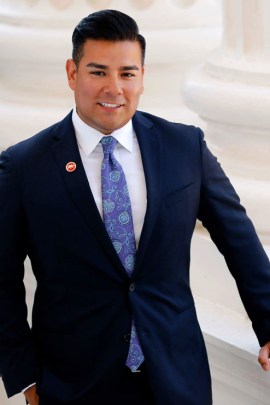
Sen. Ricardo Lara, D-Bell Gardens (Courtesy Sen. Lara’s office)
According to the text of the Laraā€™s bill, a single-payer system would help address rising out-of-pocket costs and shrinking networks of doctors.
No state has a single-payer health system. Perhaps the best-known effort to create one was in Vermont, but it failed in 2014 after the state couldnā€™t figure out how to finance it. Last year, Colorado residents rejected a ballot measure that would have used payroll taxes to fund a near universal coverage system.
In California, voters rejected a ballot initiative in 1994 that would have established a government-run universal health program. Gov. Arnold Schwarzenegger later vetoed two bills that would have accomplished the same goal.
Itā€™s difficult to create consensus on single-payer plans because they dramatically shift how health care is delivered and paid for, said Larry Levitt, a senior vice president at the Kaiser Family Foundation (California Healthline is produced by Kaiser Health News, an editorially-independent program of the foundation.)
ā€œSingle-payer plans have lots of appeal in their simplicity and ability to control costs,ā€ Levitt said. ā€œBut what I think has always held back a move to single-payer is the disruption they create in financing and delivery of care.ā€
The problem, Levitt said, is that even if they end up costing less overall, single-payer plans look to the public like a ā€œvery big tax increase.ā€
The California Nurses Association, the primary sponsor of the new bill, is planning a rally in Sacramento thisĀ week in support of a single-payer system. Bonnie Castillo, the groupā€™s associate executive director, said the goal is to create a system that doesnā€™t exclude anyone and helps relieve patientsā€™ financial burdens.
ā€œPatients and their families are suffering as a result of having very high co-pay and premium costs,ā€ she said. ā€œThey are having to make gut-wrenching decisions whether they go to the doctor or they stick it out and see if they get better on their own.ā€
Castillo said that with so much uncertainty at the national level, California has the ability to create a better system. ā€œWe think we can get this right,ā€ she said.
Charles Bacchi, president and CEO of the California Association of Health Plans, said he hadnā€™t yet seen the bill, but the trade group has opposed single-payer proposals in the past.
ā€œItā€™s hard to tell until you know the details,ā€ Bacchi said. ā€œBut past studies have shown [single-payer systems] are incredibly expensive and would be disruptive.ā€
He said health plans, doctors, hospitals and others are ā€œlaser-focused on protecting and enhancing the gains we have made in coverageā€ under the Affordable Care Act and ensuring that California continues to receive critical funding. ā€œWe think thatā€™s where the focus should be,ā€ he said.
One possible concept of a single-payer system in California would be to bring together funding from several sources under one state umbrella: Medi-Cal, which covers the poor; Medicare, the federal program that covers older adults, and private insurance.
Lara said he has not yet figured out the financing, saying that it is still early in the legislative process. But he said that even as California continues to defend the Affordable Care Act, it is time to put forward an alternative.
ā€œI think weā€™ve reached a tipping point now that we havenā€™t had before,ā€ he said.
This story was produced by , which publishes , an editorially independent service of the .


